I don’t really believe in best-of lists. Ranking ten romance anime against each other is a category error — they’re different shapes of story, aimed at different readers, released into different versions of what a romance anime even meant. What I can do is tell you which ten made a dent for me in the last decade, ordered chronologically so the shape of that decade is at least legible.
This is absolutely, unapologetically my list. These are my favorites. I’m not trying to tell anyone else what theirs should be, and I’m not trying to offend anyone whose romance-anime canon leans elsewhere — taste is taste. This list will almost certainly change as I watch more.
A note on what counts
Romance anime, for this list, means the love story is the central axis of the show. Not a subplot. Not a secondary emotional beat. If you removed the romance, the story would collapse.
1. Your Name (Kimi no Na wa.) — 2016
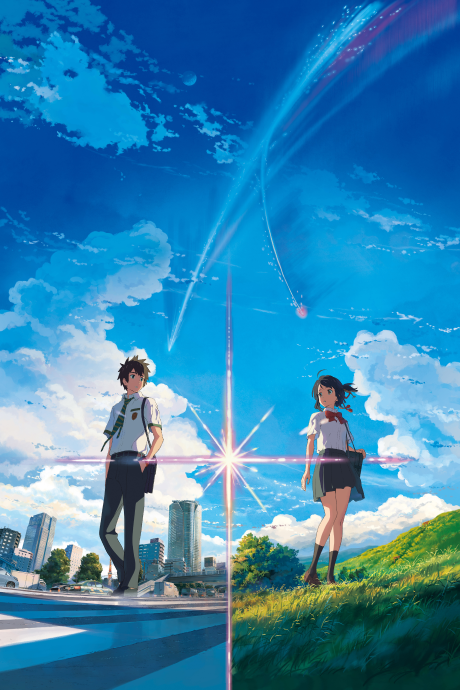
The romance that dragged anime back into the mainstream. Makoto Shinkai’s body-swap longing story grossed $405 million worldwide and held the title of highest-grossing anime film globally until Demon Slayer: Mugen Train overtook it in 2020. It sits at 8.82 on MyAnimeList, rank #34, across two million ratings.
The thing I keep coming back to is how quietly the romance works. Mitsuha and Taki are in each other’s bodies before they know each other’s names. The longing is spatial before it is emotional. By the time they’ve figured out what’s happening, the movie has spent an hour establishing that they already love each other for reasons neither one fully remembers. It’s the only Shinkai film where I think the romance genre carried him forward rather than the other way around.
2. Fruits Basket (2019 reboot) — 2019–2021
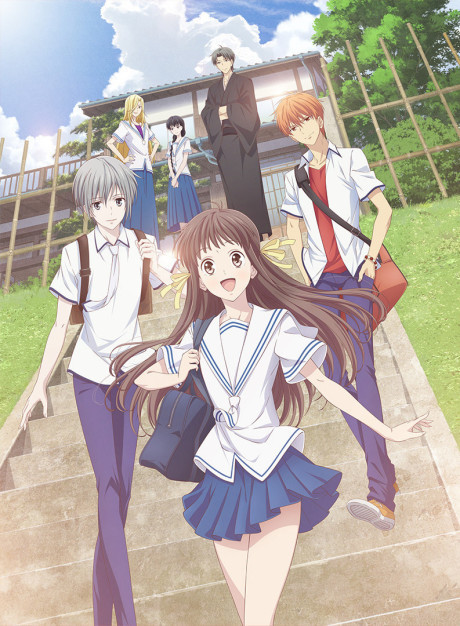
The defining shoujo manga of the early 2000s finally got its complete anime adaptation — sixty-three episodes across three seasons, covering all twenty-three volumes of Natsuki Takaya’s original. The 2001 anime covered only six. Season two won Best Drama at the 2020 Crunchyroll Anime Awards.
For anyone who grew up with the manga, this is the version where Tohru’s story actually ends. Seasons one and two are studiously careful; season three is genuinely devastating. It is also the only entry on this list that a woman in her thirties today may have been reading as a teenager — the generational arc matters. The romance, when it finally resolves, is the quietest resolution of any story on this list.
3. Horimiya — 2021
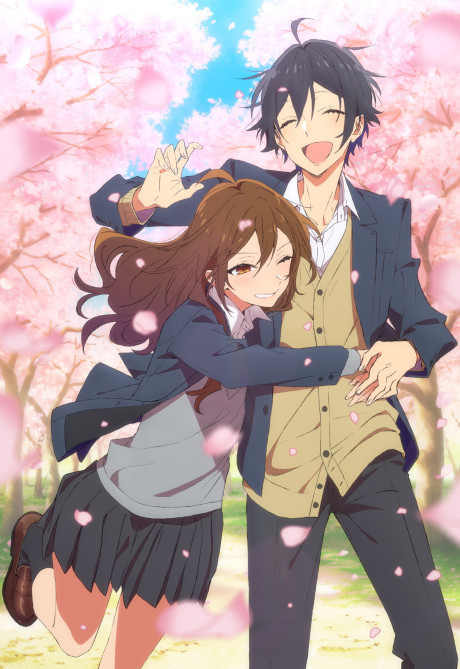
Thirteen episodes. The most atypical structure of anything on this list: Hori and Miyamura get together early, and the rest of the show is about what adult partnership actually looks like when you’re still wearing a school uniform. Based on HERO’s original webcomic Hori-san to Miyamura-kun and the Daisuke Hagiwara manga adaptation. MyAnimeList 8.18.
I think about the pacing of this show a lot. Most romance anime spend their entire run circling the confession. Horimiya treats the confession as prologue. What you get instead is a quiet documentary of two teenagers figuring out that being in a relationship is mostly small, repeated choices about who you want to be around. A second season, Piece, aired in 2023 and filled in manga chapters the first season skipped; it is charming but the tight original remains the definitive version.
4. Sasaki and Miyano (Sasaki to Miyano) — 2022
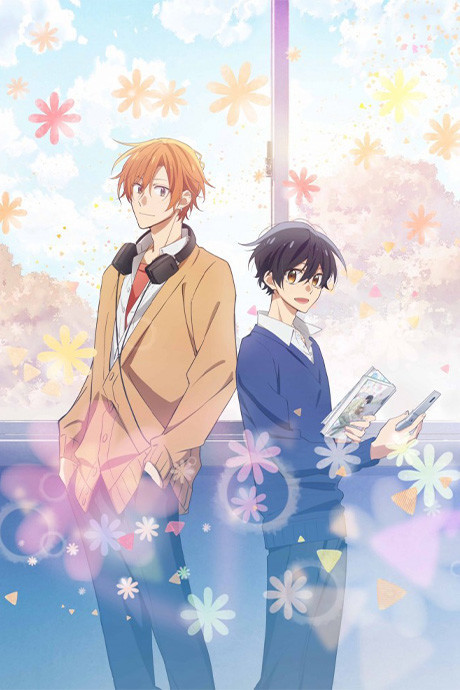
The gentlest BL anime on this list, and it’s here because it was also one of the first unambiguously-tender BL adaptations to get mainstream streaming distribution on Crunchyroll. Twelve episodes from Studio DEEN, based on Shō Harusono’s long-running manga. A theatrical sequel, Graduation Arc, followed in 2023.
There is no angst. There is no tragedy. There is no bully character who has to be repudiated before the romance can breathe. Miyano lends Sasaki BL manga, Sasaki reads the BL manga, Sasaki notices. The work of the show is the small, private choreography of two people figuring out, in slow real-time, that they want to be kind to each other. That register is very difficult to sustain for twelve episodes, and this show does.
5. Tomo-chan Is a Girl! (Tomo-chan wa Onnanoko!) — 2023
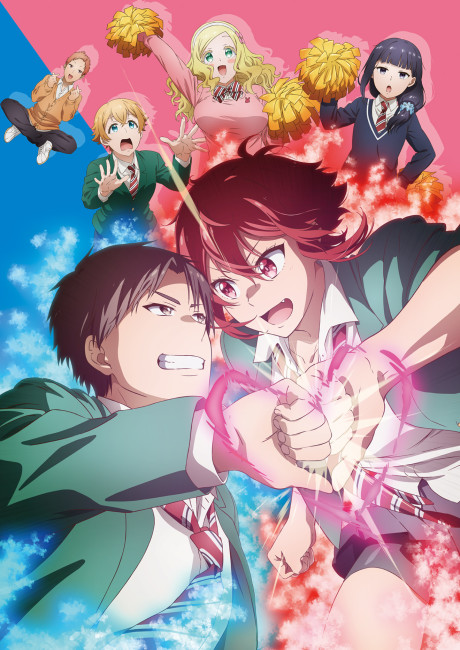
Thirteen episodes from Lay-duce, based on Fumita Yanagida’s 4-koma webcomic. Remarkably, the anime adapts the entire manga in one season — a complete story, beginning to end, no open ending, which is nearly unprecedented for a romcom of this scale.
Tomo has been best friends with Jun since they were kids. Tomo is in love with Jun. Jun does not see Tomo as a girl. The comedy is built out of the mechanism by which he stops not-seeing. What I like about the show is that it takes the gender-presentation premise seriously — Tomo’s tomboyishness isn’t played for embarrassment and it isn’t fixed by the end of the show; the question is whether Jun can revise his own perception. He can. It takes all thirteen episodes, and the romance is better for the patience.
6. Sugar Apple Fairy Tale — 2023
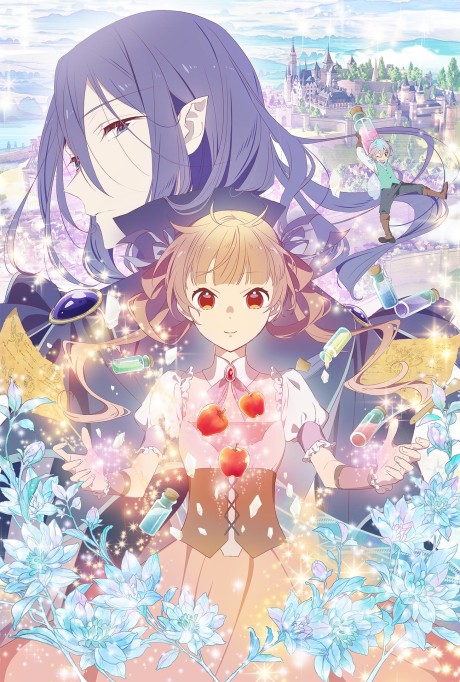
Two cours from J.C.Staff, based on Miri Mikawa’s light novel series. A silver-sugar artisan named Ann buys a warrior fairy named Shalle to serve as her bodyguard on the road to the royal capital, in a fantasy kingdom where fairies have the legal status of property. The romance is about earning the right to the other person’s trust inside a relationship that cannot, structurally, be coerced.
The reason it is here and not merely a fine shoujo fantasy is that the premise demands the show think hard about consent, power, and the cost of freedom, and it does think hard about those things. Shalle’s refusal to perform attachment on demand is the central dramatic engine of the whole story. It is the rarer kind of shoujo romance: one where the woman has to prove to the man that she deserves his interior life.
7. The Dangers in My Heart (Boku no Kokoro no Yabai Yatsu) — 2023–2024
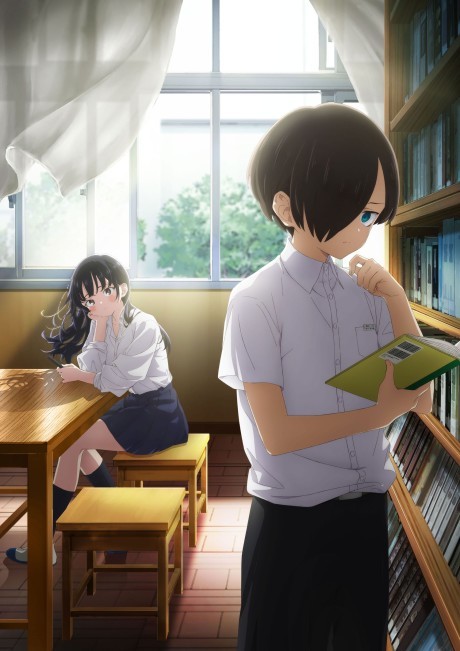
Twenty-five episodes. Shin-Ei Animation. Director Hiroaki Akagi. Based on Norio Sakurai’s manga. Ranked tenth in Anime News Network’s Top 10 Anime of 2024, and nominated for Best Romance and Best Slice of Life at the 9th Crunchyroll Anime Awards in 2025.
The premise sounds like a bad precis: a quiet, withdrawn boy develops violent intrusive thoughts about a popular girl, which resolve into a crush he has no idea what to do with. The execution is the opposite. Ichikawa’s internal monologue is written and voiced with more tenderness than almost any school romance in recent memory, and the show refuses to flatten him into a joke. Yamada is drawn as a real person rather than a love interest. It is the warmest show I’ve watched since Horimiya.
8. My Happy Marriage (Watashi no Shiawase na Kekkon) — 2023–2025
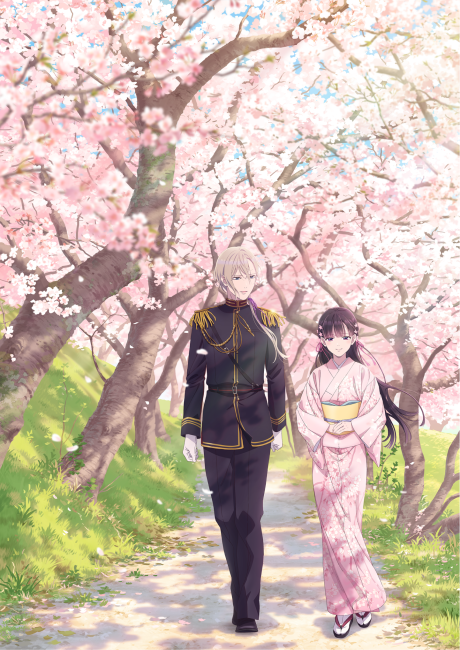
The one title on this list that lives primarily on Netflix rather than Crunchyroll. MyAnimeList sits at 7.68, lower than most of this list, which I’d argue misses the point. This is a Meiji-era arranged-marriage romance in the direct lineage of Emma (Kaoru Mori) and Snow White with the Red Hair — slow, reserved, trauma-recovery coded, and squarely written for women who want a romance that takes its time.
Based on Akumi Agitogi’s light novels, adapted by Kinema Citrus, distributed globally by Netflix. The first season establishes Miyo’s situation with a patience that feels almost period-appropriate; the second, which finished in April 2025, is the payoff. Through Netflix it likely reached a readership that wouldn’t have installed Crunchyroll to find it, which is part of why the distribution choice matters.
9. The Apothecary Diaries (Kusuriya no Hitorigoto) — 2023–2025
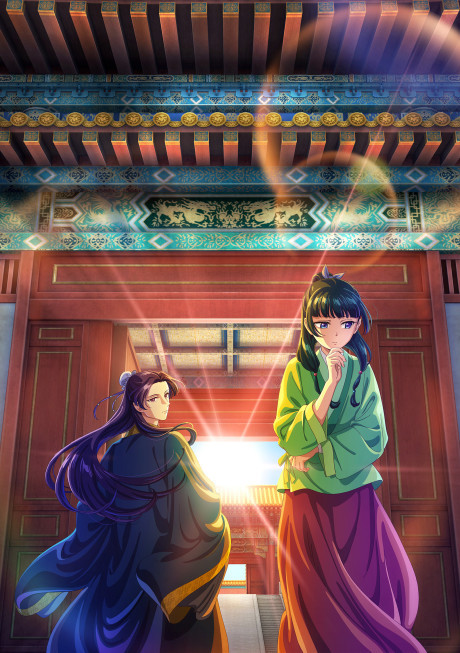
MyAnimeList 8.85, rank #30. Aoi Yūki won Best Voice Acting (Japanese) for Maomao at the 9th Crunchyroll Anime Awards in May 2025; the show was nominated for Anime of the Year, Best Drama, Best Director, Best Character Design, and Best Background Art at the same ceremony.
Technically a mystery anime. Pragmatically a slow-burn romance, because the entire forty-eight-episode run across two seasons is structured around a palace pharmacist solving crimes and a eunuch official figuring out, one episode at a time, that he is in love with her and she is several moves ahead of him about it. For readers who loved Raven of the Inner Palace and Accomplishments of the Duke’s Daughter, this is the definitive period-palace romance of the decade. It also happens to be one of the best-scored anime currently airing.
10. A Sign of Affection (Yubisaki to Renren) — 2024
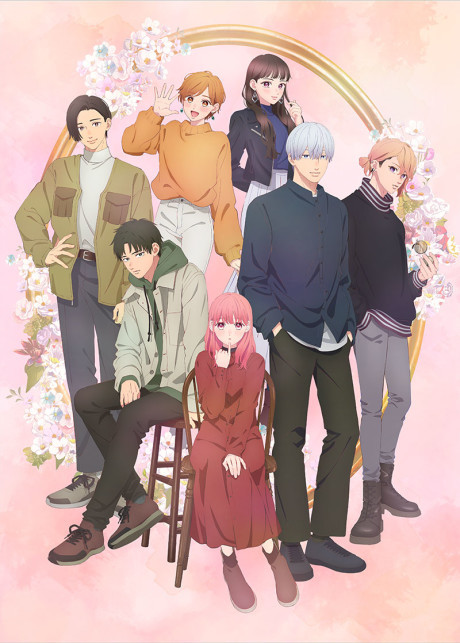
Twelve episodes from Ajia-Do, based on suu Morishita’s manga. A college romance between Yuki, a young woman who has been deaf since birth, and Itsuomi, a multilingual college student who doesn’t know Japanese Sign Language when they meet and learns it because he wants to understand her. A second season was confirmed for 2025.
The thing the show does that nothing else on this list does is treat Deaf experience as a lived reality rather than a plot device. Yuki’s inner life, shown in signed exchanges and in on-screen text, carries as much narrative weight as any spoken-dialogue track; the small daily texture of being the only Deaf person in a hearing friend group — who waits, who repeats, who explains, how exhausting it is to lipread at a party — is treated with specificity. The way Itsuomi’s multilingual background lets him approach Japanese Sign Language without fetishizing it feels genuinely written rather than designed. It is the most quietly radical romance on the list, and for 2024 alone the best new entry into the genre.
What to do when you’ve finished the list
Watching a list like this is the easy part. Keeping track of what you’ve actually watched, what you’re halfway through, what you want to get to next, and what you loved so much you want to revisit later — that’s where things get harder.
For years I kept that record in a spreadsheet. I hated it. Columns that never fit the question I was asking. Sorting that broke whatever I’d tagged. Adding an episode meant finding the right row. Looking for a title six months later was a small, recurring punishment.
Eventually the spreadsheet was inconvenient enough that I built my own solution. That’s what ManiShelf is — a small Mac, iPhone, and iPad app for the catalog, not the content. It doesn’t store episodes or files. It stores a card for each title: description, characters, your own notes, your score, and the shelf you’ve put it on: backlog, currently watching, up next, finished, or any category you want to make. The data lives on your device. If a platform disappears — legal, illegal, or somewhere in between — your shelf is still there, because it was never on the platform to begin with. No accounts, no subscriptions, no tracking. If you’d like to take a look, the app lives at oitoana.dev/manishelf.
- Anastasiia