The three words sound almost the same for a reason: they share a written root. 漫画 is the Japanese compound manga, and Korean manhwa (만화 / 漫畫) and Chinese manhua (漫画) are essentially the same two characters, pronounced differently. In print they are still close cousins. In 2026, though, manga vs manhwa vs manhua has become a real question, because they have turned into three increasingly distinct traditions with different formats, reading habits, and audiences. Mistaking one for another is an easy way to misread what the story is actually trying to do.
This is a short field guide to telling them apart, plus a handful of places to start in each.
Manga — Japanese
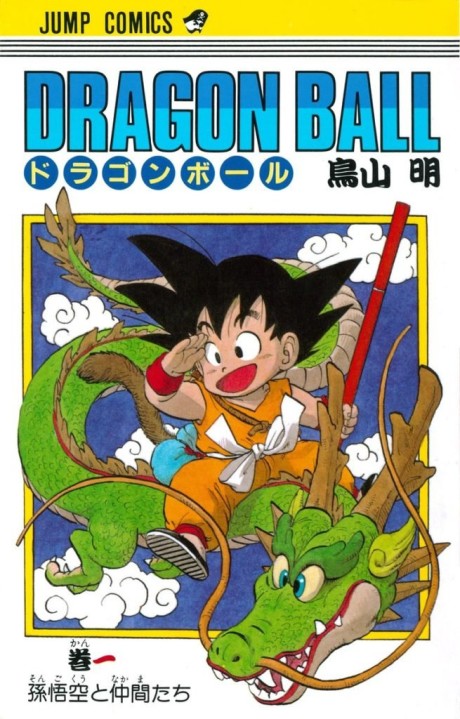
What is manga? Japanese comics. The modern form traces to late-nineteenth-century Japan and reaches its current shape in the post-war Tezuka era. It is overwhelmingly published first in weekly or monthly magazines (Weekly Shōnen Jump, Morning, Afternoon, Hana to Yume) and then collected into volumes called tankōbon.
How to recognize it. Black and white, almost always. Read right-to-left: open the book from what a Western reader would call "the back." Panels on a page are read right-to-left, top-to-bottom. Volume counts range from a single oneshot to One Piece’s ongoing hundred-plus.
Where to start.
- Dragon Ball, Akira Toriyama (1984–1995) — the foundational battle-shōnen. Son Goku, martial arts training, seven wish-granting orbs scattered across a fantasy Earth. Shaped nearly every shōnen that came after it.
- Attack on Titan, Hajime Isayama (2009–2021) — the 34-volume post-apocalyptic mystery that became the globally biggest manga of the 2010s. Humanity inside walls, giant humanoids outside them, and a decade-long reveal nobody saw coming.
- Jujutsu Kaisen, Gege Akutami (2018–2024) — the defining dark-fantasy shōnen of its era. A high-schooler swallows a cursed finger and has to learn to control the ancient sorcerer now sharing his body.
- A Home Far Away, Teki Yatsuda (2020–2021) — winter 1990. A young man named Alain, adrift in a country not his own, meets Hayden, a free-spirited cook. A tragedy. One of those manga that sits with you for years after you finish it. I still think about it. Not widely read in English; worth the hunt.
- A Kiss with a Cat, Miko Senri (2020–2022) — Erina can’t stand her aloof classmate Nekoyama-kun. Then she rescues an injured kitten in her yard and it turns out to be him. Supernatural romcom, four volumes, entirely charming.
Manhwa — Korean
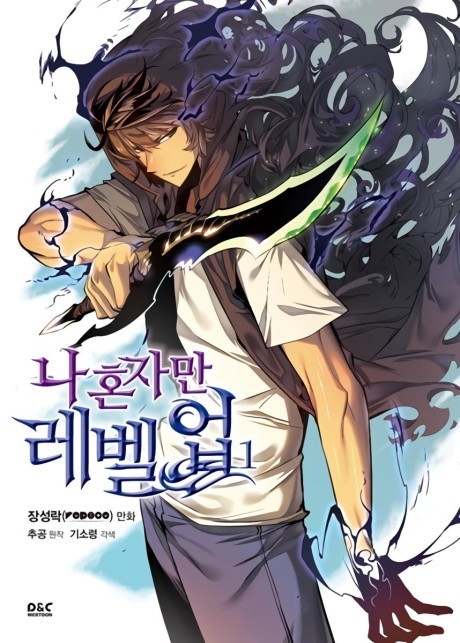
What is manhwa? Korean comics. The older print form is as old as its Japanese cousin and shares many conventions. What changed the form permanently was the launch of Naver Webtoon in 2004, which pioneered the vertical-scroll, mobile-first, full-color webtoon format. Over the past two decades this has become the default shape of Korean comics.
How to recognize it. Almost always full color. Read top-to-bottom in a single scroll, not page-by-page. Panels are stacked vertically and sized for a phone screen. English-speaking readers typically encounter manhwa through WEBTOON, Tapas, Lezhin, Manta, or Tappytoon.
Where to start.
- Solo Leveling, Chugong & DUBU (2018–2023) — the most-read manhwa ever, with over 14 billion cumulative views per the 2024 World Webtoon Awards. Action-fantasy.
- Marry My Husband, Seongsojak & LICO (2021–2023) — a terminal-cancer patient catches her husband cheating with her best friend, is murdered, wakes up ten years earlier, and decides to set them up to marry each other the second time around. Adapted into the 2024 tvN K-drama.
- Your Eternal Lies, Jeonhuchi & Kkomak (2021–2023) — a notorious jailbreaker named Rosen Walker is transferred to the world’s worst prison, guarded by its most decorated war hero. A mystery-romance about what he is actually there to unravel.
- This Villainess Wants a Divorce!, Nokki & Abin (2018–2021) — a reader wakes up inside a romance novel as its most reviled secondary villainess, and decides her first order of business is to get out of the marriage her original self was executed for.
Manhua — Chinese, Taiwanese, and Hong Kong
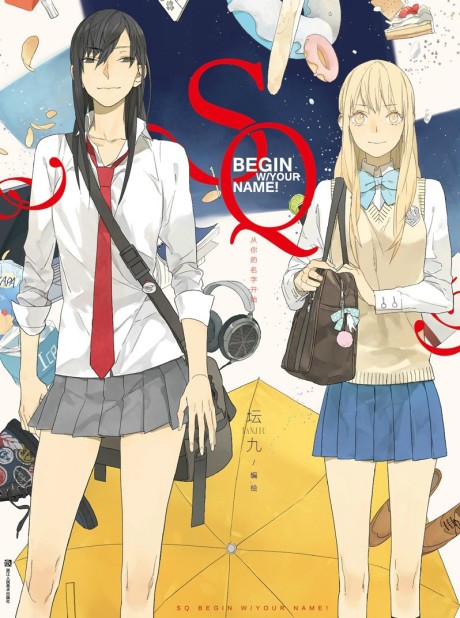
What is manhua? Chinese comics (including Taiwan and Hong Kong). It is actually the oldest of the three terms: classical Chinese painting theory used 漫画 centuries before the Meiji-era Japanese adoption. Modern comics manhua, however, emerged in early-twentieth-century Shanghai. There are now three overlapping streams: Mainland Chinese manhua distributed through platforms like Kuaikan Manhua, Tencent Comics, and Bilibili; Hong Kong manhua, which has a long action-comics lineage (Old Master Q, The Storm Riders); and Taiwanese manhua, which overlaps stylistically with Japanese manga.
How to recognize it. Usually full color, often carrying visible Chinese visual traditions: ink-wash shading, brushwork, historical costume. Reading direction varies. Mainland and platform-native manhua typically read left-to-right; older Hong Kong work often follows the Japanese right-to-left convention; modern digital manhua is increasingly vertical-scroll.
Where to start.
- Their Story / Tamen de Gushi, Tan Jiu (2014–2019) — slice-of-life GL romance, probably the most internationally beloved modern manhua. Two high-school girls, eight years of gentle drawings, one quiet misunderstanding at the center.
- Heaven Official’s Blessing / Tian Guan Ci Fu manhua, Mo Xiang Tong Xiu & STARember (2019–ongoing) — danmei fantasy manhua adaptation of one of the most popular web novels ever written in Chinese.
- Mo Dao Zu Shi / The Grandmaster of Demonic Cultivation manhua, Mo Xiang Tong Xiu & Luo Di Cheng Qiu (2017–2022) — cultivation-era danmei. The source novel is, by distance, the most influential danmei of the 2010s.
- Tales of Demons and Gods, Mad Snail (2015–ongoing) — the manhua most English-speaking readers encounter first. Cultivation fantasy. Enormous.
- Feng Ni Tian Xia / Phoenix Goes Against the World, Lu Fei & Juzi Cha — long-running palace-intrigue-and-romance manhua aimed squarely at the audience that loves The Remarried Empress and The Apothecary Diaries.
Manga vs manhwa vs manhua: the quick way to tell them apart
| Manga | Manhwa | Manhua | |
|---|---|---|---|
| Country | Japan | South Korea | China / Taiwan / Hong Kong |
| Dominant modern format | Print volumes | Vertical-scroll webtoons | Web / app, increasingly scroll |
| Color | B&W | Full color | Full color |
| Reading direction | Right-to-left | Top-to-bottom scroll | Left-to-right (or scroll) |
| Canonical platform | Weekly magazines + tankōbon | WEBTOON, Lezhin, Tapas | Kuaikan Manhua, Tencent, Bilibili |
| Distinctive look | Dense inked pages, screentones | Full-color mobile-sized panels | Painterly color, heavy historical costume |
Where they overlap
These traditions are not hermetically sealed. Korean webtoons are read by enormous audiences in Japan and the US. Japanese manga has shaped Chinese and Korean artists for three generations. MXTX’s Chinese web novels have manhua adaptations, manga adaptations, and Japanese and English translations of all three. English-speaking readers in 2026 regularly alternate between all three forms in a single week, often inside the same app.
What still matters, when you’re choosing what to read, is three things: reading direction (start from the right cover for manga, scroll for most manhwa and newer manhua), color expectation (set it when you open the file), and the shape of a chapter (tight weekly manga episodes versus webtoon episodes optimized for one phone screen at a time). Those are the practical differences. Everything else is tradition.
A note on keeping all three on the same shelf
Once you start reading across all three traditions, the single hardest thing is keeping track of what you’ve read in which one, where you left off, and which titles in your backlog belong to which tradition, because the conventions are different enough that you actually want to know.
For years I kept my own list in a spreadsheet. I hated it. Columns that never fit the question I was asking. Sorting that broke whatever I’d tagged. Adding a chapter meant finding the right row. Looking for a title six months later was a small, recurring punishment.
Eventually the spreadsheet was inconvenient enough that I built my own solution. That’s what ManiShelf is — a small Mac, iPhone, and iPad app for the catalog, not the content. It doesn’t store chapters or pages. It stores a card for each title: description, characters, your own notes, your score, and the shelf you’ve put it on: backlog, currently reading, up next, finished, or any category you want to make. The data lives on your device. If a platform disappears — legal, illegal, or somewhere in between — your shelf is still there, because it was never on the platform to begin with. No accounts, no subscriptions, no tracking. If you’d like to take a look, the app lives at oitoana.dev/manishelf.
- Anastasiia